What Does Ghana’s August 2026 Inflation Rise Mean for Diaspora Property Investors?
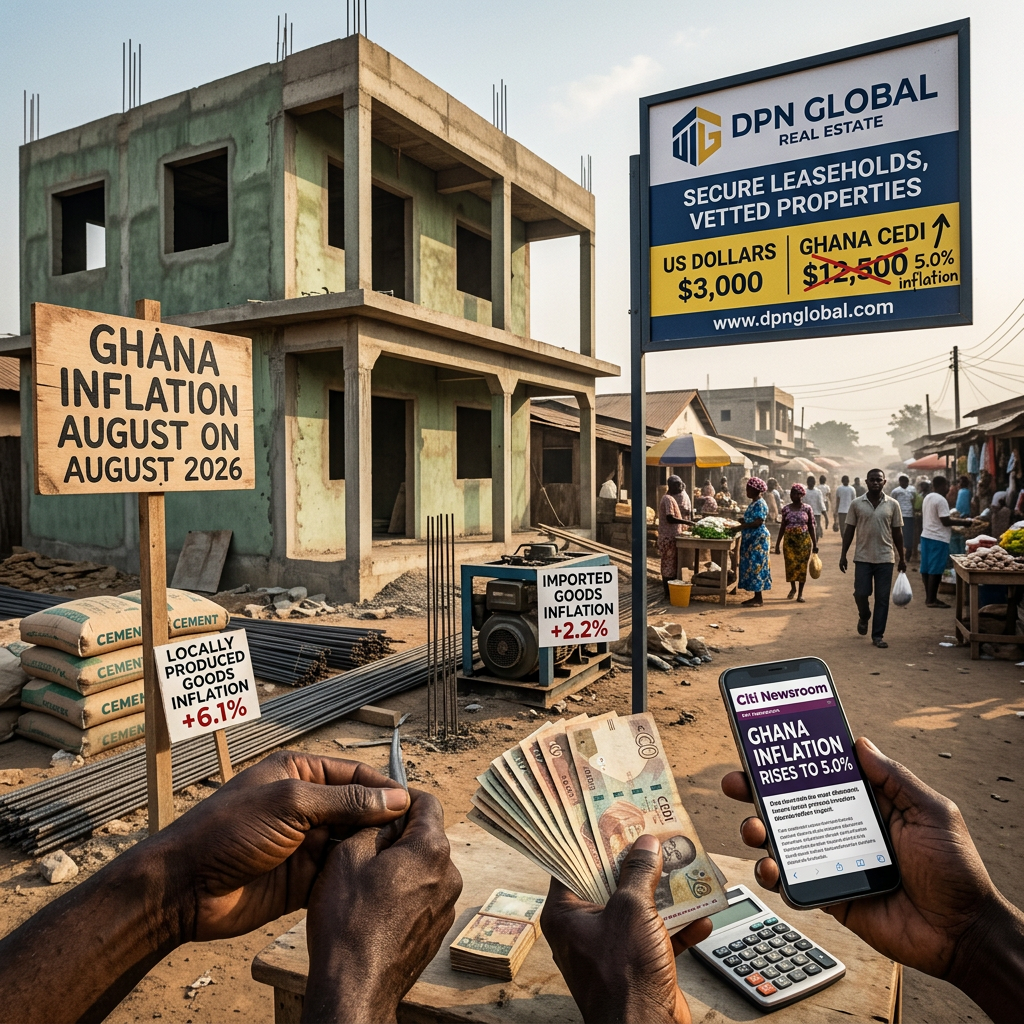
Ghana’s year-on-year inflation rate rose to 5.0% in August 2026, up from 4.6% in July, according to the Ghana Statistical Service. The increase was mainly driven by higher non-food inflation, which reached 6.8%, and a slight uptick in services inflation to 8.6%. Food inflation continued its downward trend, easing to 3.0%. Goods inflation also rose to 3.8%, while inflation for locally produced items climbed to 6.1%. Notably, imported inflation remained low at 2.2%, indicating that external price pressures are not the main factor behind the rise. Despite this monthly increase, inflation is still less than half of what it was a year ago, when it stood at 11.5% in August 2025, reflecting ongoing macroeconomic recovery. This data was reported by Citi Newsroom (Citi Newsroom).
Takeaway: Ghana’s inflation remains low by recent standards, with the latest uptick driven by domestic factors rather than external shocks. For diaspora investors, this signals a broadly stable economic environment and continued cedi stability, both of which support confidence in long-term real estate investment.
How Does Ghana’s Inflation Trend Affect Economic Stability?
Ghana’s inflation rate, while slightly higher in August, is still dramatically lower than the 11.5% recorded in August 2025, according to the Ghana Statistical Service. This sustained moderation in inflation is a sign of macroeconomic recovery and growing stability in the country’s financial environment. The fact that imported inflation remains contained at 2.2% suggests that the Ghanaian cedi is holding steady against major foreign currencies, reducing the risk of sudden price shocks from abroad.
For the broader economy, stable inflation supports predictable business planning, consumer confidence, and investment decisions. The easing of food inflation to 3.0% also helps maintain household purchasing power, which is crucial for both local residents and those sending remittances from abroad. The rise in non-food and services inflation points to increased activity and demand in sectors like housing, utilities, and transportation, which are closely linked to real estate and infrastructure development.
What Does This Mean for Property Demand and Investment Conditions?
For diaspora investors, a stable inflation environment is a key factor in assessing the risk and return profile of property investments in Ghana. The contained inflation, especially for imported goods, signals that the cedi is relatively stable. This is important for those converting US dollars, British pounds, or Canadian dollars into Ghanaian property assets, as it reduces the risk of currency-related losses.
The uptick in non-food and services inflation may indicate rising demand for housing, office space, and other real estate-linked services. As the economy recovers and consumer confidence grows, demand for both residential and commercial properties could increase, supporting rental yields and long-term capital appreciation. However, investors should remain attentive to local inflation trends, as rising costs for locally produced goods and services can affect construction expenses and operational costs for rental properties.
Land values in urban and peri-urban areas may also benefit from the broader economic stability, as more Ghanaians and diaspora buyers seek secure, appreciating assets. However, it remains essential to conduct thorough due diligence, especially given the prevalence of land disputes and the importance of title verification in Ghana.
What Should Diaspora Investors Consider in This Environment?
Diaspora investors should view Ghana’s current inflation trend as a sign of relative economic stability, but not as a guarantee of risk-free investment. The low and stable inflation rate supports confidence in the property market, but due diligence remains critical. Non-citizens can acquire property in Ghana through renewable leaseholds of up to 50 years, as freehold is generally reserved for citizens. Land registration typically takes 6 to 12 months, and title verification before payment is non-negotiable due to the frequency of land-related disputes in Ghana’s courts.
DPN Global provides a protective framework for diaspora investors, offering access to vetted properties, legal support, and on-ground guidance throughout the transaction process. Whether you are interested in residential homes, commercial spaces, land acquisition, or rental investments, DPN ensures that every step is transparent and secure.
FAQ: Ghana Inflation and Diaspora Property Investment
-
How does inflation affect property investment in Ghana?
Inflation influences the cost of building materials, rental yields, and the overall value of property assets. Stable or moderate inflation, as seen in Ghana in August 2026, generally supports investor confidence and long-term planning. -
Is the Ghanaian cedi stable for foreign investors?
According to the Ghana Statistical Service, imported inflation remains low, suggesting that the cedi is relatively stable against major foreign currencies. This reduces currency risk for diaspora investors converting funds into local property. -
What protections does DPN offer against property fraud?
DPN vets every property for authenticity and investment potential, provides legal support, and guides clients through title verification and Lands Commission registration, minimizing the risk of fraud or disputes.
At DPN, where trusted connections meet global opportunities, we guide diaspora investors through every step of the property journey in Ghana. Explore verified opportunities at dpn-global.com, or reach out to us directly at info@dpn-global.com for personalized support.