Ghana Adds 12,000-Vehicle Assembly Capacity: What Does This Mean for Diaspora Property Investors?
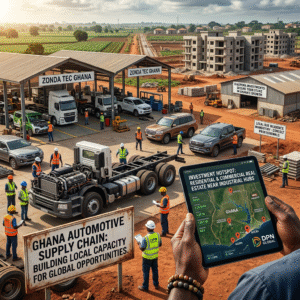
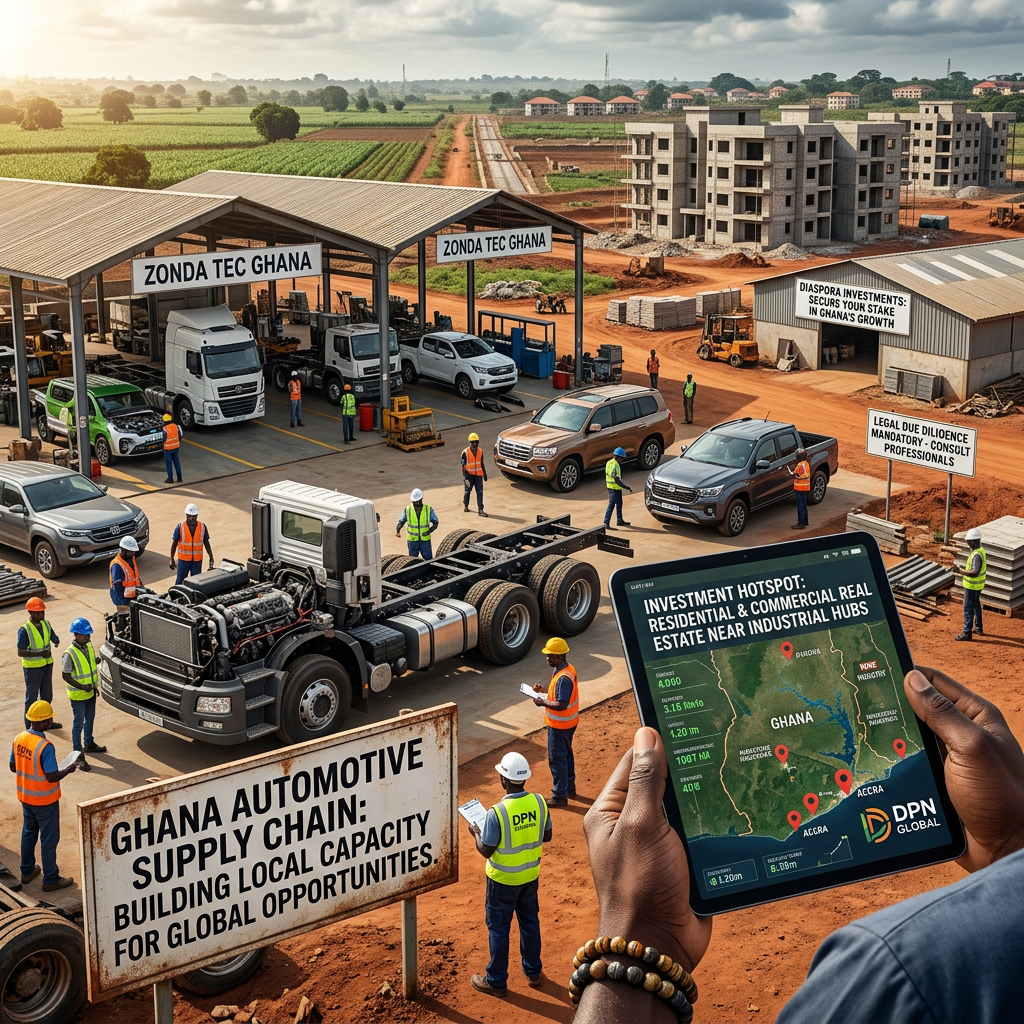
On September 15, Ghana’s President John Dramani Mahama inaugurated the third phase of Zonda Tec Ghana’s vehicle assembly plant, boosting the country’s annual production capacity to at least 12,000 vehicles. The expanded facility will assemble SUVs, pickup trucks, electric vehicles, trucks, trailers, and tankers. At the event, President Mahama emphasized the need for Ghana to move beyond assembly and develop a fully integrated domestic automotive supply chain, including components like batteries, tires, wiring harnesses, seats, glass, plastics, and metal parts. This milestone is part of Ghana’s broader industrialization agenda, highlighted by the 24-Hour Economy Policy launched in May 2025, which aims to create jobs and stimulate local manufacturing growth. According to Ecofin Agency, Ghana’s economy grew by 6% in 2025, with foreign investment rising sharply and the automotive market projected to expand from $2.02 billion in 2025 to $2.21 billion in 2026.
Takeaway: Ghana’s expanding automotive sector signals a strengthening economy, rising foreign investment, and growing industrial infrastructure. For diaspora investors, these developments may create new opportunities in residential, commercial, and land investments, especially near emerging industrial hubs.
How does Ghana’s new vehicle assembly capacity reflect broader economic trends?
The commissioning of Zonda Tec Ghana’s expanded assembly plant is a clear indicator of Ghana’s ongoing industrialization and economic growth. The government’s 24-Hour Economy Policy, launched in May 2025, is designed to foster job creation and boost local manufacturing. The country’s 6% economic growth in 2025 and the sharp rise in foreign investment, as reported by Ecofin Agency, underscore growing confidence in Ghana’s economic direction.
This expansion in vehicle assembly is not just about producing more cars. President Mahama’s call for a fully integrated supply chain signals a strategic push to retain more economic value within Ghana. By encouraging local production of automotive components, the government aims to deepen industrial capacity, create skilled jobs, and reduce reliance on imports. These moves are likely to attract further foreign direct investment and support the growth of ancillary industries, from logistics to retail and services.
What does this mean for property demand and land values in Ghana?
The growth of Ghana’s automotive sector and the government’s industrialization drive may increase demand for both residential and commercial properties, particularly in areas near major industrial sites like the Zonda Tec Ghana plant. As new jobs are created and supporting industries emerge, there is likely to be a rise in demand for housing for workers, office space for suppliers, and land for logistics and warehousing.
For diaspora investors, these trends could signal opportunities in several areas. Residential property near industrial zones may see increased rental demand, especially for long-term rentals catering to skilled workers and managers. Commercial real estate, including offices and retail spaces, may become more attractive as supply chain businesses and service providers seek proximity to manufacturing hubs. Land acquisition in corridors connected to industrial growth could also become more valuable, provided that title verification and proper registration are secured through the Lands Commission—a critical step given the prevalence of land disputes in Ghana.
Is now a good time for diaspora investors to consider property in Ghana’s industrial corridors?
Ghana’s expanding industrial infrastructure, rising foreign investment, and government commitment to local manufacturing create a more stable and attractive environment for property investment. For members of the African diaspora, this may be an opportune moment to explore residential, commercial, or land investments in areas benefiting from industrial growth.
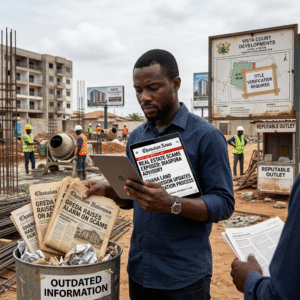
However, it is essential to approach these opportunities with caution. Non-citizens can acquire property in Ghana through renewable leaseholds of up to 50 years, as freehold is generally reserved for citizens. Land registration typically takes 6 to 12 months, and title verification before payment is non-negotiable due to the frequency of land-related disputes in Ghana’s courts. Working with vetted professionals and on-ground teams is crucial to ensure a secure transaction and protect your investment.
What should diaspora investors consider before investing in Ghana’s property market?
Before making any property investment in Ghana, diaspora investors should prioritize due diligence and legal protection. This includes verifying land titles, understanding leasehold rules for non-citizens, and ensuring all transactions are registered with the Lands Commission. The presence of a growing industrial sector may increase property values and rental yields, but only for those who navigate the process with care and professional support.
DPN Global provides a trusted pathway for diaspora investors, offering access to vetted properties, legal support, and on-ground guidance throughout every step of the transaction. Our commitment is to protect your interests and help you build wealth securely, whether you are interested in residential, commercial, or land investments.
FAQ: Diaspora Investment and Ghana’s Automotive Sector
-
How does Ghana’s automotive industry growth affect property investment?
The expansion of vehicle assembly and related supply chains may increase demand for residential and commercial properties near industrial hubs. This can create opportunities for rental income and long-term value appreciation, especially for diaspora investors seeking secure, vetted investments. -
What are the key risks for diaspora investors in Ghana’s property market?
The main risks include land disputes, unverified sellers, and misunderstandings about leasehold rules for non-citizens. Title verification and proper registration with the Lands Commission are essential to avoid costly mistakes. -
Can non-citizens own property in Ghana?
Non-citizens can acquire property through renewable leaseholds of up to 50 years. Freehold ownership is generally reserved for Ghanaian citizens. It is important to work with licensed professionals to ensure compliance and security.
At DPN Global, where trusted connections meet global opportunities, we guide diaspora investors through every step of the property journey in Ghana. Explore verified opportunities at dpn-global.com, or reach out to us directly at info@dpn-global.com for personalized support.