Ghana’s Investment Drive at ABIS 2026: What It Means for Diaspora Property Investors
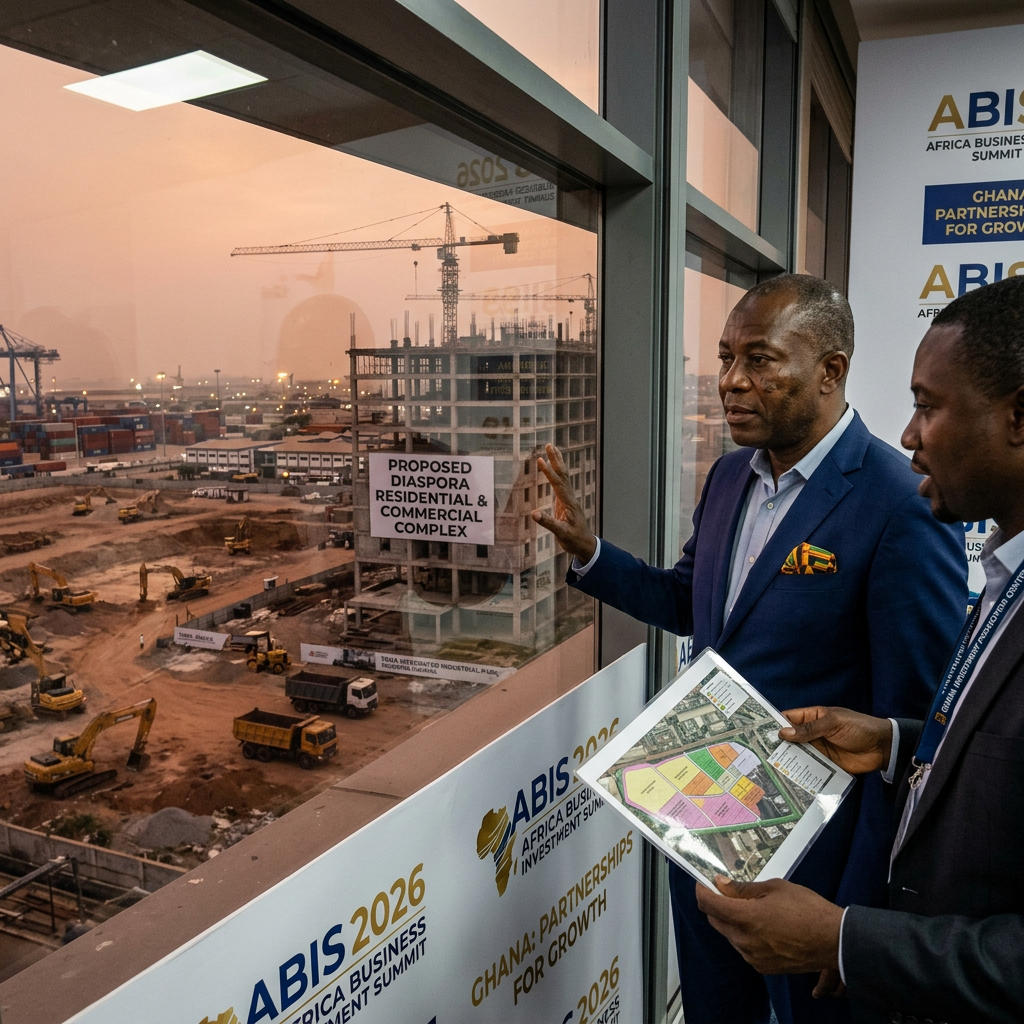
At the Africa Business Investment Summit (ABIS) 2026, held at MGM National Harbor in Washington, D.C., Ghana’s government made a compelling case for investment in the country. Speaking on behalf of President John Dramani Mahama, Deputy Minister for Trade, Agribusiness and Industry, Hon. Sampson Ahi, highlighted Ghana’s robust economic performance, including a real GDP growth of 6% in 2025, non-oil GDP expansion of 7.6%, and a first-quarter 2026 growth of 6.4%. The government identified real estate and infrastructure among the top sectors for investment, alongside energy, technology, agriculture, mining, tourism, and manufacturing. Special attention was given to industrial development zones such as the Greater Kumasi Industrial City and Special Economic Zone, Dawa Industrial Zone, and Tema Integrated Industrial Park. Ghana’s Ambassador to the U.S., H.E. Victor Smith, directly addressed the African diaspora, calling for partnerships that create jobs and expand opportunities. This news was reported by the Embassy of Ghana in Washington DC, USA.
Takeaway: Ghana’s government is actively courting diaspora and foreign investment, with real estate and infrastructure at the forefront. For diaspora investors, this signals growing opportunities in vetted property, land, and rental markets, especially near industrial and economic zones.
How does Ghana’s economic growth impact real estate opportunities?
Ghana’s strong economic indicators, as presented at ABIS 2026, suggest a favorable environment for property investment. Sustained GDP growth and targeted government support for sectors like real estate and infrastructure may increase demand for both residential and commercial properties, particularly in urban and industrial corridors.
The government’s emphasis on industrial development zones such as the Greater Kumasi Industrial City, Dawa Industrial Zone, and Tema Integrated Industrial Park points to areas where land values and rental demand could rise. As these zones attract businesses and workers, the need for housing, retail, and office space is likely to grow. For diaspora investors, this means that acquiring property in or near these zones could offer both capital appreciation and rental yield potential, provided investments are made with proper due diligence and title verification.
What does Ghana’s focus on diaspora partnerships mean for overseas investors?
Ghana’s direct appeal to the diaspora at ABIS 2026 signals a welcoming policy environment for overseas investors. The government’s call for diaspora-focused partnerships is likely to draw attention to the importance of trusted, transparent investment channels, especially for those living in the US, UK, and Canada who wish to reconnect with their heritage while building wealth.
For the African diaspora, the risks of property fraud and land disputes remain real. Ghana’s courts frequently handle land-related cases, making title verification and legal support essential. The government’s public commitment to diaspora engagement, combined with the country’s role as host of the AfCFTA Secretariat, positions Ghana as a strategic entry point for those seeking access to Africa’s broader market. However, non-citizens should remember that property acquisition is typically through renewable leaseholds of up to 50 years, with freehold reserved for citizens. Land registration can take 6 to 12 months, underscoring the need for patience and professional guidance.
Is now a good time to invest in land or property near Ghana’s industrial zones?
The government’s spotlight on industrial development zones at ABIS 2026 suggests these areas may see increased investment and urbanisation. For diaspora investors, this could mean rising land values and growing demand for rental properties as businesses expand and new jobs are created.
However, investing in these corridors requires careful vetting. Land disputes are common, and only properties with clear, verified titles should be considered. Working with licensed agents and legal professionals is essential to avoid common pitfalls. DPN Global’s model—offering vetted properties, legal support, and on-ground guidance—aligns with the government’s call for secure, job-creating investment. Whether considering residential, commercial, or land acquisition, diaspora investors should prioritise transparency and due diligence.
What should diaspora investors consider before making a move?
Before investing, diaspora buyers should assess the location’s proximity to industrial zones, infrastructure projects, and urban growth corridors. Understanding leasehold rules, the timeline for land registration, and the importance of title verification is critical. The government’s focus on real estate and infrastructure as priority sectors, combined with macroeconomic growth, makes now a promising time to explore opportunities—but only with trusted partners who can navigate Ghana’s unique property landscape.
DPN Global stands as a guide and protector for diaspora investors, ensuring every property is vetted for authenticity and investment potential, and every transaction is supported by licensed professionals from start to finish.
FAQ: Ghana Investment and Diaspora Property Opportunities
-
What are the main risks for diaspora investors buying property in Ghana?
The most significant risks include land disputes, unverified sellers, and misunderstandings about leasehold rules for non-citizens. Title verification and working with licensed professionals are essential to avoid these pitfalls. -
How long does it take to register land in Ghana?
Land registration in Ghana typically takes between 6 and 12 months. This process is crucial for securing legal ownership and should be completed before any payment is made. -
Can non-citizens own property in Ghana?
Non-citizens can acquire property in Ghana through renewable leaseholds of up to 50 years. Freehold ownership is generally reserved for citizens, so understanding leasehold terms is important for diaspora investors.
At DPN Global, where trusted connections meet global opportunities, we guide diaspora investors through every step of the property journey in Ghana. Explore verified opportunities at dpn-global.com, or reach out to us directly at info@dpn-global.com for personalised support.