
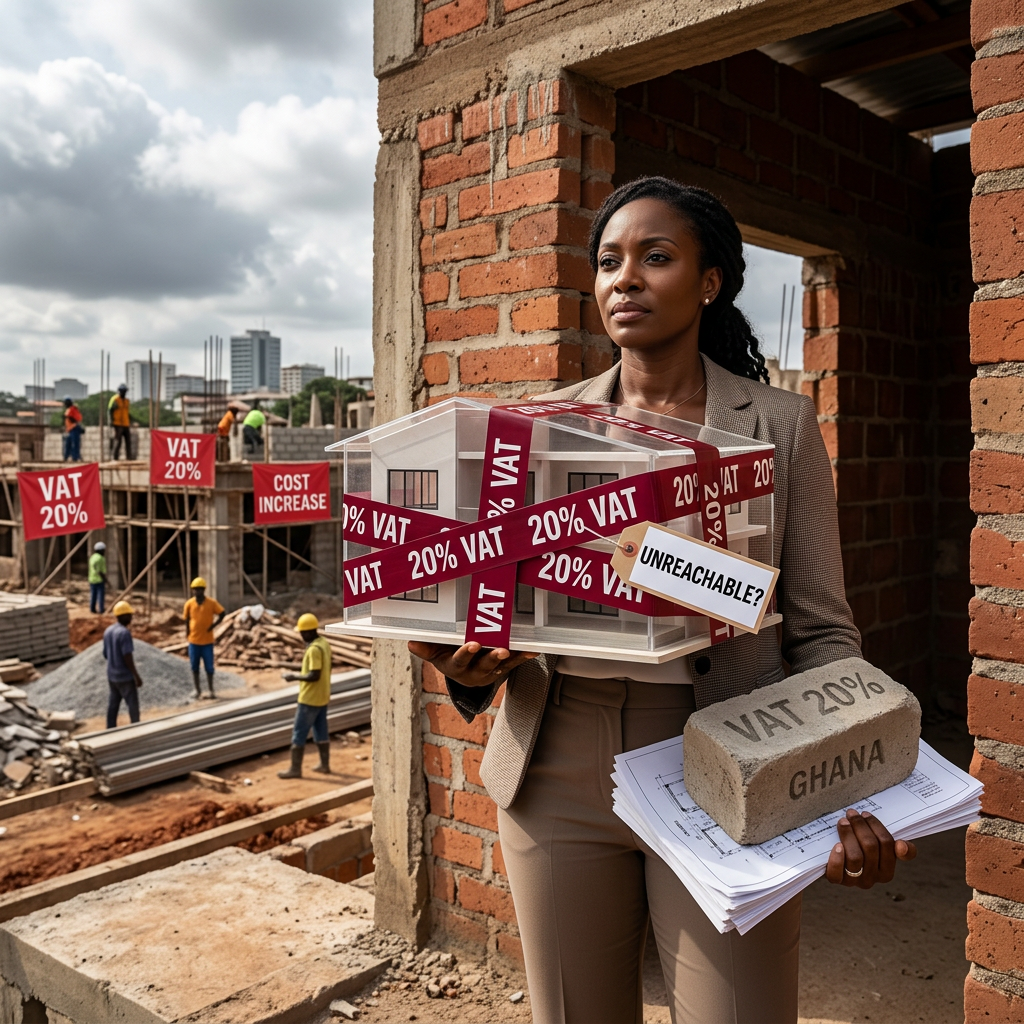
How Ghana’s 20% VAT on Residential Construction Impacts Diaspora Property Investment
The Ghana Real Estate Developers Association (GREDA) has publicly urged the government to remove the 20% Value Added Tax (VAT) on residential construction, warning that this tax is making housing even less affordable for Ghanaians. Dr James Condua Orleans-Lindsay, GREDA’s President, stated at a recent meeting that the VAT increases construction costs, which are then passed on to buyers, further deepening Ghana’s housing deficit. This policy directly affects diaspora investors and returnees, as it raises the cost of developing or purchasing property in Ghana. The news was reported by Graphic Online.
Takeaway: The 20% VAT on residential construction in Ghana is a significant factor driving up housing costs, according to GREDA. For diaspora investors, this tax increases the entry price for new builds and may affect the overall viability of property projects. Understanding this policy landscape is essential for anyone considering residential investment in Ghana.
Why is the 20% VAT on residential construction a concern for Ghana’s housing market?
The 20% VAT on residential construction directly increases the cost of building homes, making it harder for both local and diaspora buyers to afford property. According to GREDA, this tax is a major contributor to Ghana’s ongoing housing affordability crisis, as it inflates construction expenses and ultimately raises the price of homes for buyers.
Ghana already faces a significant housing deficit, and additional costs from VAT can discourage new developments or make completed homes unattainable for many. For diaspora investors, who often seek to build or purchase homes for family, retirement, or rental income, these higher costs can be a barrier to entry. The policy also creates uncertainty for developers, who must factor in the tax when planning projects, potentially slowing the pace of new residential construction.
What does this signal for Ghana’s economy and real estate sector?
GREDA’s renewed call to scrap the VAT highlights ongoing policy debates that could shape the future of Ghana’s real estate market. The association’s warning signals that the current tax regime may be dampening demand and limiting the supply of new homes, which could have broader implications for economic growth and urban development.
For the wider economy, persistent housing shortages can affect workforce mobility, urban planning, and social stability. If the VAT remains in place, developers may focus on higher-end projects to offset costs, potentially widening the gap between supply and demand for affordable housing. Conversely, any future policy change to reduce or remove the VAT could stimulate new investment and make homeownership more accessible, especially for diaspora buyers looking to reconnect with their heritage through property ownership.
How does the VAT affect property demand and investment conditions for the diaspora?
The 20% VAT increases the upfront cost of new builds, which may reduce demand among diaspora investors seeking residential property in Ghana. Higher construction costs can translate into higher purchase prices, affecting both the affordability and potential returns on investment.
For those considering building a home or investing in residential developments, the VAT is a critical factor in project budgeting and financial planning. It may also influence decisions about location, property type, and timing. In some cases, investors may look for opportunities in segments less affected by the tax, such as land acquisition or commercial properties, though these come with their own considerations and risks.
It is important to note that non-citizens in Ghana acquire property through renewable leaseholds of up to 50 years, and land registration typically takes 6 to 12 months. Title verification before payment is essential, as land-related disputes are common in Ghana’s courts. These standing facts, combined with the VAT policy, shape the overall investment landscape for diaspora buyers.
What should diaspora investors consider before buying or building in Ghana?
Before making any property investment in Ghana, diaspora buyers should carefully assess the impact of the 20% VAT on their total project costs. This includes understanding how the tax affects both construction and final sale prices, as well as how it may influence the long-term value and rental yield of the property.
Working with a trusted partner is essential. Diaspora Property Network (DPN Global) provides access to vetted properties, legal support, and on-ground guidance throughout the transaction process. Our team ensures that every property is verified for authenticity and investment potential, and that clients are supported by licensed agents and legal professionals at every step. This approach helps protect investors from common risks such as land disputes, unverified sellers, and misunderstandings about leasehold rules for non-citizens.
FAQ: Ghana’s 20% VAT and Diaspora Property Investment
-
How does the 20% VAT affect the cost of buying a home in Ghana?
The 20% VAT on residential construction increases the cost of building new homes, which developers typically pass on to buyers. This means higher purchase prices for both local and diaspora investors, making affordability a greater challenge. -
Are there ways for diaspora investors to reduce the impact of VAT on their property purchase?
While the VAT applies broadly to new residential construction, working with vetted developers and legal professionals can help ensure transparency in pricing and identify any available incentives or exemptions. DPN Global guides clients through these considerations. -
What other risks should diaspora investors be aware of when buying property in Ghana?
In addition to VAT, investors should be aware of the leasehold system for non-citizens, the importance of title verification, and the potential for land disputes. DPN Global provides end-to-end support to help mitigate these risks.
At DPN Global, where trusted connections meet global opportunities, we are committed to guiding diaspora investors through Ghana’s evolving property landscape. Explore verified opportunities at dpn-global.com, or reach out to our team directly at info@dpn-global.com for personalized support.