
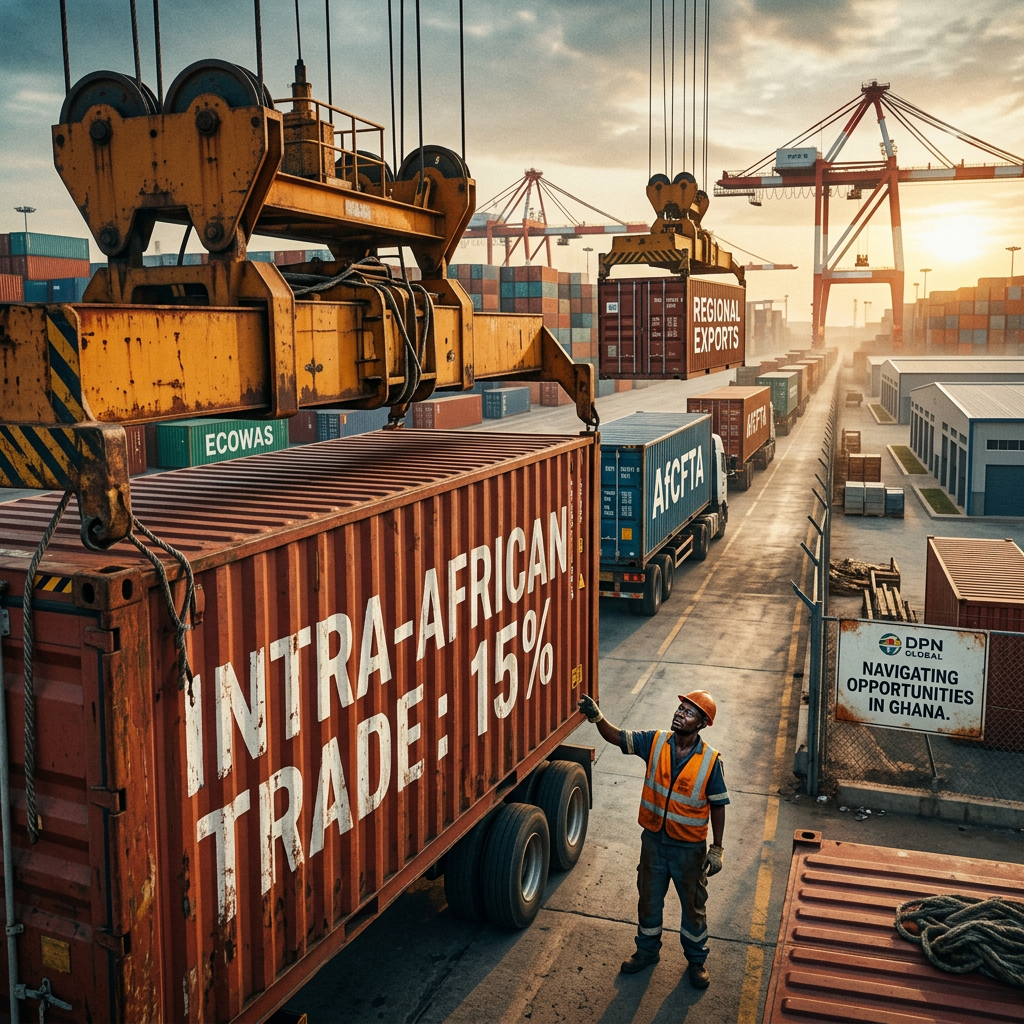
Intra-African Trade Remains Low: What This Means for Diaspora Property Investors in Ghana
A new joint report from the African Union, United Nations Economic Commission for Africa (UNECA), and the World Bank reveals that intra-African trade accounts for just 15–17% of the continent’s total exports. Released at the AU headquarters in Addis Ababa, the report, “Integrating Africa: From Threads to Hubs,” highlights that most African countries are too small and fragmented to achieve industrial scale on their own. The report calls for urgent reforms to customs, logistics, and regulatory systems to unlock the continent’s trade potential and build competitive cross-border value chains. According to APA News, about 60% of total trade costs are due to behind-the-border constraints rather than tariffs.
Takeaway: For diaspora investors, this report signals that Ghana’s role in a more integrated African market could drive demand for commercial real estate, logistics hubs, and mixed-use developments. As regional trade grows, property investment opportunities in Ghana are likely to expand, especially in sectors supporting cross-border commerce.
Why is intra-African trade so low, and what does the new report recommend?
Intra-African trade remains low because of fragmented markets, inefficient customs, and poor logistics. The report from the African Union, UNECA, and World Bank finds that only 15–17% of Africa’s exports are traded within the continent, compared to much higher rates in other regions. Most of the barriers are not tariffs, but rather behind-the-border issues like slow customs processes, inconsistent regulations, and weak logistics networks.
The report urges African governments to overhaul these systems by integrating customs, digital data, financial payments, and logistics across borders. It also recommends linking national industrial incentives with regional sourcing and exports to create competitive value chains. These changes are seen as essential for Africa to move from fragmented markets to industrial hubs that can compete globally.
How could greater trade integration affect Ghana’s economy and property market?
Greater trade integration could make Ghana a key player in West Africa’s cross-border value chains, increasing demand for commercial and industrial real estate. As Ghana aligns with regional trade frameworks like the African Continental Free Trade Area (AfCFTA), it is likely to attract more investment in logistics hubs, warehousing, and mixed-use developments that support trade and manufacturing.
For the Ghanaian economy, improved trade systems may lead to more stable growth and job creation, especially in sectors linked to regional exports. This environment is attractive to diaspora investors seeking both financial returns and a role in Africa’s economic transformation. The AfCFTA framework, which underpins these integration efforts, also supports long-term economic stability—a key factor for property buyers from the diaspora.
What does this mean for commercial and industrial property investment in Ghana?
This report signals that commercial and industrial property in Ghana may become more attractive as the country positions itself within a more integrated African market. Demand for logistics hubs, warehousing, and mixed-use developments is likely to grow as trade corridors expand and cross-border commerce increases.
DPN clients should note that while the opportunity is promising, the property market in Ghana still requires careful navigation. Land registration can take 6 to 12 months, and land-related disputes are common, making title verification essential. Non-citizens can acquire property through renewable leaseholds of up to 50 years, but freehold is generally reserved for citizens. DPN’s role is to guide investors through these complexities, ensuring every property is vetted and every transaction is supported by licensed professionals and on-ground teams.
What should diaspora investors consider before investing in Ghana’s commercial real estate?
Diaspora investors should consider the potential for growth in logistics and commercial property, but also the risks of unverified sellers, land disputes, and regulatory changes. Working with a trusted partner like DPN is critical to avoid common pitfalls and ensure investments are secure and compliant with Ghanaian law.
DPN provides end-to-end support, from property vetting and title searches to legal guidance and on-ground assistance. This approach protects investors from fraud and helps them capitalize on opportunities created by regional trade integration. As Ghana’s role in West African trade grows, the need for trusted connections and expert guidance becomes even more important.
FAQ: Intra-African Trade and Diaspora Property Investment
-
How does regional trade integration affect property values in Ghana?
Regional trade integration can increase demand for commercial and industrial properties, especially near trade corridors and logistics hubs. As Ghana becomes more connected to West African markets, property values in these sectors may rise, offering new opportunities for diaspora investors. -
What are the main risks for diaspora investors in Ghana’s property market?
The main risks include land disputes, unverified sellers, and complex leasehold rules for non-citizens. Title verification and working with licensed professionals are essential to avoid these pitfalls and protect your investment. -
Why is title verification important when buying property in Ghana?
Title verification is crucial because land-related disputes are common in Ghana’s courts. Ensuring the property has a clear, verified title before payment helps prevent legal issues and secures your investment.
At DPN, where trusted connections meet global opportunities, we guide diaspora investors through every step of the property journey in Ghana. Explore verified opportunities at dpn-global.com, or reach out to us directly at info@dpn-global.com for personalized support.